
Planting
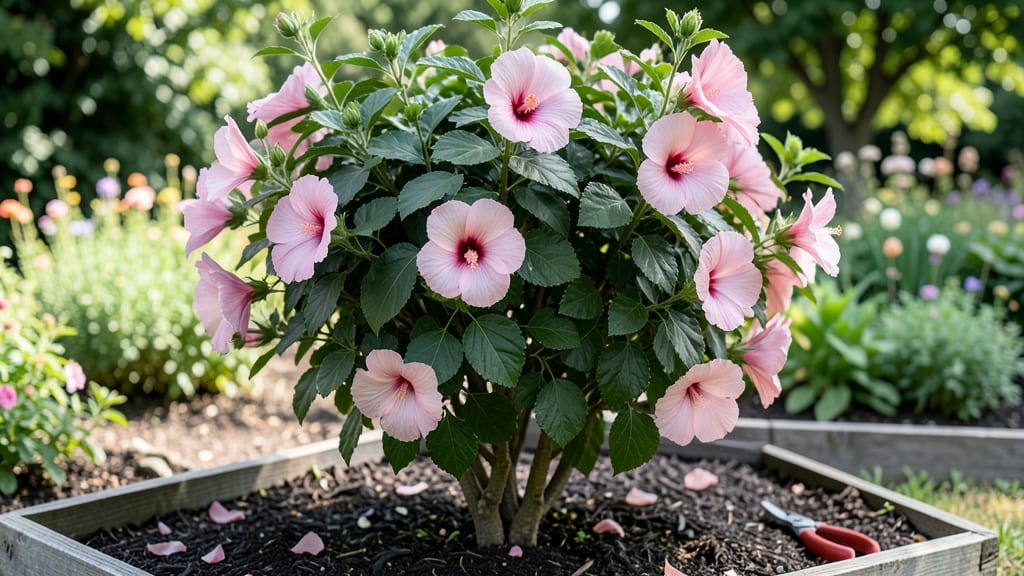
For hibiscus in Zone 4, select cold-tolerant species like Hibiscus moscheutos or Hibiscus syriacus, then shield them with heavy mulch, frost covers, or indoor relocation before freezing temperatures. Plant in full sun with fast-draining soil to maximize survival.
Zone 4's harsh winters make hibiscus survival a challenge, but the right approach transforms this into a rewarding gardening task. 🌿 The key lies in choosing varieties bred for cold resilience—Hibiscus moscheutos can handle temperatures down to -20°F, while Hibiscus syriacus thrives in Zone 3 conditions.
These species develop thicker stems and deeper root systems that naturally resist freezing. Beyond variety selection, proper soil preparation and strategic placement (like south-facing slopes) create microclimates that extend the growing season by weeks.
The winter protection methods mentioned aren't just about survival—they preserve the plant's energy stores so it rebounds vigorously in spring.
What many gardeners overlook is the importance of timing when implementing these protections. Applying mulch too late or removing frost cloths too early can undo months of care.
I've found that combining these methods—like wrapping container plants in bubble wrap before adding mulch—creates a thermal blanket effect that can push survival limits by 5-10°F.
The goal isn't just to keep the plant alive, but to maintain its health so it can produce those stunning blooms year after year.
💡 In This Article
- Cold-Hardy Hibiscus Varieties for Zone 4 Gardens
- Step-by-Step Winter Protection for Zone 4 Hibiscus
Cold-hardy hibiscus varieties for Zone 4 gardens
The cold tolerance in hibiscus species comes down to their natural adaptations. Hibiscus moscheutos (swamp hibiscus) thrives in Zone 4 because its deep root systems can reach moisture up to 4 feet underground, insulating the plant's core from freezing.
This species also develops thicker stems that store more energy reserves, allowing it to bounce back after winter. Its temperature threshold sits around -20°F, making it one of the toughest options for northern gardens.
In contrast, Hibiscus syriacus (rose of Sharon) has a slightly different survival strategy. This variety can handle -30°F temperatures when fully established, thanks to its woody stems that resemble small trees.
The key difference is its ability to go dormant completely, with buds protected deep within the plant structure. 🌱 What's fascinating is how these two species handle moisture differently—H. moscheutos loves wet soil (hence "swamp"), while H. syriacus prefers well-drained conditions, showing their adaptability to different Zone 4 microclimates.
Hybrid varieties like 'Annabel' or 'Southern Belle' combine these traits, offering both cold resistance and vibrant blooms. These hybrids often use H. syriacus as rootstock for tropical hibiscus varieties, creating a grafted plant where the root system provides cold hardiness while the top growth delivers tropical flowers.
This grafting technique is what allows gardeners to grow hibiscus with 10-inch blooms in Zone 4 when they'd normally only survive in Zone 9.
The science behind these adaptations involves something called "cryoprotection"—where plants produce special proteins that act like antifreeze in their cells.
During cold snaps, these proteins bind to ice crystals, preventing them from growing large enough to damage cell walls. H. moscheutos produces more of these proteins than tropical hibiscus varieties, which is why it can survive 10°F colder temperatures without protection. 💫
When selecting varieties, also consider bloom time. Early-blooming hibiscus (like 'Luna Red') may get caught by late frosts, while late-season varieties ('Diana') have a better chance of surviving winter intact. The trade-off is that late bloomers might miss some of the summer flowering window in cooler climates.
For container gardeners, dwarf varieties like 'Blue Bird' offer the same cold tolerance in a 3-foot-tall package, perfect for patios or balconies. These compact plants can be easily moved indoors during extreme cold snaps, making them ideal for urban Zone 4 gardens where space is limited.
What most gardeners don't realize is that the first year after planting is critical for establishing cold hardiness. Young hibiscus plants need extra protection during their first winter because their root systems aren't fully developed.
This means doubling down on mulch thickness (6-8 inches) and using additional insulation methods during their initial growing season. 🌿