
Blooming
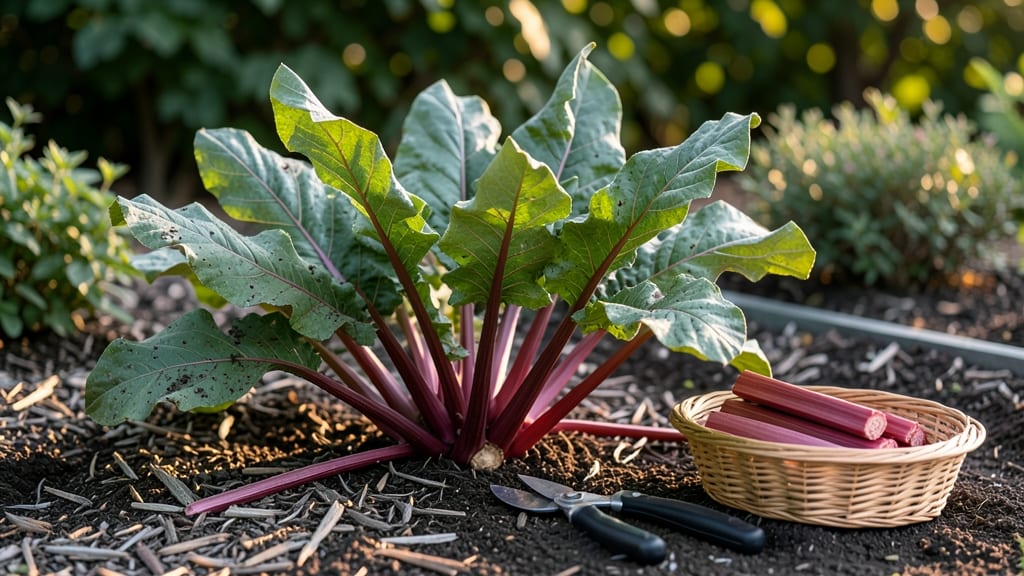
Rhubarb season typically runs for 4–6 weeks in early spring, with most harvests peaking between late April and early June across USDA Zones 3–9, though hardy varieties can sometimes produce into July with proper protection.
This brief window happens because rhubarb is a cool-season crop that needs vernalization—a cold period—to trigger growth after winter dormancy. 🌱 Once soil warms to 50°F (10°C), stalks shoot up rapidly, but they're also sensitive to late frosts, which can damage tender new growth.
Gardeners in colder zones often see shorter harvests because frost dates push back the start time, while milder climates may enjoy a few extra weeks if they protect plants from unexpected cold snaps.
What's interesting is how pruning techniques can influence season length—cutting stalks at the base encourages more regrowth, while pulling them can stress the plant. I've found that mulching with straw or leaves in early spring keeps roots warm, sometimes extending the harvest by 1–2 weeks in marginal climates.
The key is balance: overharvesting weakens the plant for next year, while underharvesting lets it store energy for future seasons.
💡 In This Article
- Rhubarb Growth Stages and Climate Dependence
- Extending Rhubarb Season: Pruning and Care Tips
Rhubarb growth stages and climate dependence
Rhubarb's seasonal window begins with a biological process called vernalization, where the plant requires 4–8 weeks of cold temperatures (32–40°F or 0–4°C) to break winter dormancy. This chilling period signals the plant that spring is coming, triggering the production of growth hormones like gibberellins.
Without this cold exposure, rhubarb stalks may emerge weak or not at all—think of it as nature's way of ensuring the plant only grows when conditions are safe.
The exact timing of emergence varies dramatically by USDA Zone. In Zone 3 (e.g., Minnesota), where winters are harsh, rhubarb often doesn't emerge until late May after the last frost, giving a 3–4 week harvest window by early July.
Meanwhile, in Zone 9 (e.g., Southern California), where winters are mild, stalks may appear as early as February, stretching the season until June. The 50°F (10°C) soil threshold is critical—below this, root activity stalls, while above it, growth accelerates rapidly. 🌱
What most gardeners don't realize is how late frosts can sabotage early harvests. New stalks are incredibly frost-sensitive, with damage occurring at temperatures below 28°F (-2°C).
In Zone 5 (e.g., New York), where average last frost dates range from May 10–20, gardeners often lose their first 2–3 weeks of potential harvest if a late freeze hits.
This is why experienced growers plant rhubarb in sheltered microclimates or use frost cloths—every protected day can mean 1–2 extra weeks of harvest.
The plant's growth cycle also follows distinct phases: dormancy (winter), emergence (spring), active growth (early summer), and dormancy preparation (late summer).
During active growth, rhubarb can produce 1–2 inches of stalk per day under ideal conditions, but this pace slows as temperatures rise above 75°F (24°C). Heat stress causes stalks to become tough and woody—this is why harvests taper off by early July in most regions, even with hardy varieties.
Here's how climate zones break down for typical harvest windows:
- Zones 3–4: Late May to early July (4–5 weeks)
- Zones 5–6: Early May to late June (5–6 weeks)
- Zones 7–9: February to early June (6–8 weeks)
The northernmost zones often see shorter seasons because their growing degree days (a measure of heat accumulation) are limited. For example, Zone 4 (e.g., Wisconsin) may only accumulate 800–1,000 growing degree days by July, while Zone 8 (e.g., Virginia) can reach 1,500+, allowing for extended growth.
This is why gardeners in warmer climates can sometimes harvest into early July without additional care.
Understanding these patterns helps explain why rhubarb's season is so fleeting—it's not just about days on the calendar, but a delicate balance of temperature triggers, frost timing, and growth physiology.
The plant's entire lifecycle is finely tuned to capitalize on the brief window between frost risk and summer heat. 💫