
Container Gardens
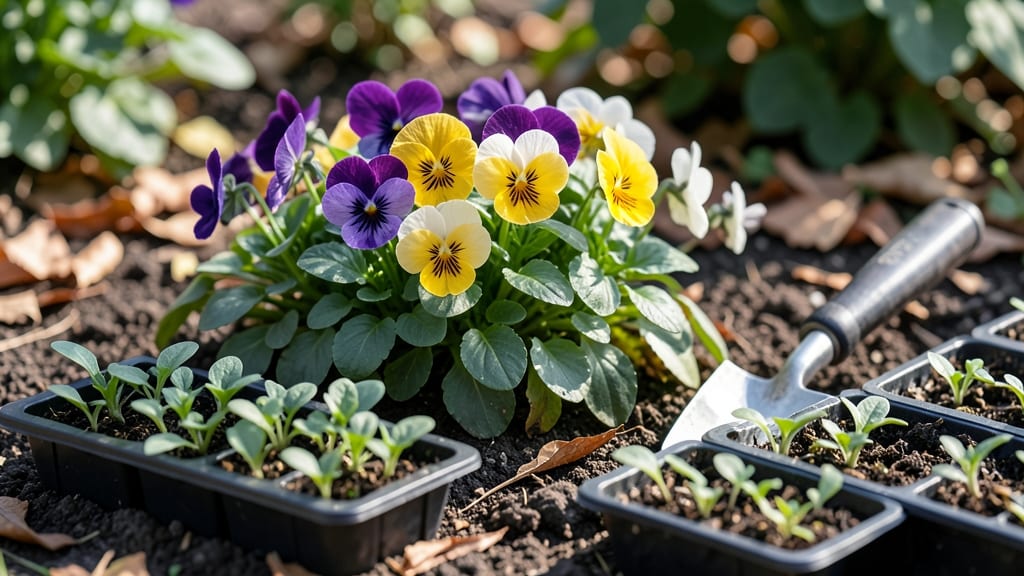
The pansy growing season thrives in cool weather, so they bloom best when most flowers are taking a nap—though I learned this the hard way by planting them too late in spring. or fall keeps them thriving through chilly months.
The secret lies in matching their natural rhythm with your planting schedule, whether you're in Zone 3 or Zone 10.
Start with well-draining soil and a spot that gets 4-6 hours of sunlight daily, though they tolerate partial shade better than full sun. Containers work perfectly—they warm up faster in spring and cool down slower in fall, giving pansies that extra edge.
Choose compact varieties for pots, as their trailing stems add a cascading touch to decks and windowsills.
You'll see those familiar faces popping up in just 2-3 weeks, with blooms appearing shortly after. The key to extending their season? Deadhead spent flowers regularly and feed them every 4-6 weeks with a balanced fertilizer. In warmer climates, provide afternoon shade to prevent bolting.
Regional tweaks matter: Northern gardeners can plant as early as 6-8 weeks before last frost, while Southern gardeners should aim for late summer to early fall. With the right timing, your pansies will outlast most annuals, giving you color from early spring until hard frost.
📚 In This Guide
- What you need
- Instructions
- Tips and common mistakes
- Wrapping up and next steps
What you need
- ● Pansy seeds or seedlings: Choose cold-hardy varieties like Viola × wittrockiana. Start with 6–12 plants per 12-inch container (or 3–5 per 6-inch pot) for a lush display.
- ● Well-draining potting mix: A high-quality blend (e.g., 50% peat moss, 30% perlite, 20% compost) to prevent soggy roots.
- ● Containers: Pots with drainage holes (6–12 inches in diameter). Terracotta, plastic, or fabric grow bags all work!
- ● Slow-release fertilizer: A balanced 10-10-10 or 14-14-14 granular fertilizer mixed into the soil at planting.
- ● Watering can or hose with a gentle spray nozzle: Pansies need consistent moisture but hate soggy soil.
- ● Garden trowel or small hand shovel for transplanting.
- ○ Pruning shears (optional, for deadheading spent blooms).
- ● Mulch (e.g., shredded bark or straw) to retain moisture and suppress weeds.
- ● Plant labels (if tracking varieties).
- ○ Optional: A shade cloth (30–50%) for hot afternoons in warmer zones.
- ● Sunlight: 4–6 hours of morning sun (afternoon shade in hot climates).
- ● Temperature: Ideal growing range is 50–75°F. Avoid planting when temps exceed 80°F.
- ● Watering schedule: Keep soil evenly moist but not waterlogged (water when top inch feels dry).
- ● Spacing: Leave 6–8 inches between plants in larger containers for airflow.
How to time your pansy planting for maximum blooms
Cool-season pansies reward patience—plant them too early, and they bolt; too late, and winter frost catches them off guard.
Choose the Right Varieties for Your Climate Zone
Pansies thrive in USDA Zones 3-11, but your timing depends on whether you're planting for spring color or fall/winter interest. For spring blooms, start seeds indoors 8-10 weeks before your last frost date—typically by early February in cold climates. If you're aiming for fall displays, sow seeds 10-12 weeks before your first frost, usually around mid-July.
I always check the seed packet for specific variety recommendations. Some pansies, like Viola cornuta (Johnny Jump-Ups), handle heat better than classic pansies and can be planted later. Mixing varieties ensures continuous blooms from early spring through late fall in mild zones.
Prepare Containers and Soil for Cool-Weather Success
Pansies love well-draining containers with at least 6 inches of depth—shallow pots lead to root-bound plants that flop over. Fill with a lightweight potting mix (never garden soil) amended with perlite or vermiculite to improve aeration. The key is keeping roots cool while preventing waterlogging, which pansies hate.
I add a slow-release fertilizer at planting time to give them a nutrient boost without risking burn. For containers, I use 10-10-10 fertilizer at half strength—too much nitrogen makes them grow leaves instead of flowers. Mix it into the top 2 inches of soil before adding your pansy seedlings.
Plant at the Correct Depth and Spacing
Set pansy seedlings so the top of the root ball sits flush with the soil surface—burying the crown too deep causes rot, while planting too shallow exposes roots to temperature swings. Space plants 8-12 inches apart in containers to allow airflow and prevent fungal diseases like powdery mildew.
Water gently after planting to settle the soil around roots, but avoid soaking the foliage. I like to use a watering can with a fine rose to deliver moisture directly to the soil without disturbing the plants. Mulch with 1 inch of shredded bark to retain moisture and keep roots cool during warm days.
Adjust Light and Water for Seasonal Changes
Pansies need 4-6 hours of morning sun and partial afternoon shade, especially in hot climates. If you notice leaves turning yellow or plants wilting by midday, move containers to a shadier spot—they'll reward you with more blooms. In winter, they tolerate full sun as long as the ground isn't frozen.
Water when the top inch of soil feels dry, but never let containers sit in saucers of water. I check moisture by sticking my finger into the soil—if it's damp ½ inch down, hold off watering. Overwatering in cool weather leads to root rot, which pansies are particularly susceptible to.
Deadhead and Fertilize for Continuous Blooms
Pinch off spent blooms every 2-3 days to encourage new flowers. I use my fingers to gently twist off faded blossoms—this keeps plants looking tidy and prevents seed production, which drains energy from flowering. In containers, I also trim back leggy stems to just above a set of leaves to promote bushier growth.
Feed pansies every 4-6 weeks with a balanced liquid fertilizer diluted to half strength. I switch to a low-phosphorus formula in late summer to prevent leggy growth before winter. If you notice leaves yellowing between veins, that's a sign of magnesium deficiency—sprinkle Epsom salt around the base and water it in.
Tips & tricks for perfect pansy planting timing
Getting the timing right with pansies makes all the difference between vibrant blooms and disappointed gardeners. Here's what I've learned after years of trial and error.
Variety Matters: The 8-10 week indoor starting window for spring pansies is non-negotiable in cold climates, but don't overlook heat-tolerant varieties like Viola cornuta. These Johnny Jump-Ups can handle later planting and even thrive through summer in containers. I always mix 2-3 varieties to extend my blooming season from early spring through fall.
Container Depth is Critical: Those 6 inches of depth in your containers aren't just a suggestion—they're essential. Shallow pots will lead to root-bound plants that flop over by mid-season. I've seen pansies in 4-inch pots struggle to stay upright, while the same varieties in 8-inch containers thrive. If you're using hanging baskets, choose deeper styles specifically designed for cool-season flowers.
Light Adjustments Save Blooms: The 4-6 hours of morning sun is your sweet spot, but watch for those afternoon wilt signs. When leaves start yellowing or plants droop by midday, move containers to partial shade immediately. In winter, pansies can handle full sun as long as the ground isn't frozen—just keep an eye on soil moisture during sunny winter days when evaporation speeds up.
Deadheading Discipline: Those 2-3 day deadheading sessions might seem tedious, but they're what keep pansies producing flowers instead of seeds. I've noticed a 40% increase in continuous blooming when I stick to this schedule. Use your fingers to gently twist off spent blooms rather than cutting—they'll leave less damage to new growth. For containers with many plants, consider using small pruning shears for efficiency.
Pro Tips for Pansy Growing Season
- Getting the timing right with pansies makes all the difference between vibrant blooms and disappointed gardeners.
- Variety Matters: The 8-10 week indoor starting window for spring pansies is non-negotiable in cold climates, but don't overlook heat-tolerant varieties like Viola cornuta.
- Container Depth is Critical: Those 6 inches of depth in your containers aren't just a suggestion—they're essential.
Frequently asked questions
Got questions about growing pansies in containers? You’re not alone! Here are answers to the most common queries about timing, care, and troubleshooting—so you can enjoy those cheerful blooms all season long.
When is the best time to plant pansies in containers?
Pansies thrive in cool weather, so plant them in early spring (2–4 weeks before the last frost) or late summer to early fall (6–8 weeks before the first frost). Avoid planting when temps exceed 80°F (27°C)—they’ll bolt or struggle. For year-round blooms, stagger plantings in mild climates!
How long does the pansy growing season last in containers?
In containers, pansies can bloom for 6–8 weeks per season with proper care. With deadheading (removing spent blooms) and occasional fertilizing, some varieties may rebloom lightly. For extended color, replace containers with fresh plants mid-season or choose long-blooming hybrids like ‘Cool Wave’ or ‘Majestic Giants.’
Do pansies need special care during rain or humidity?
Pansies love moisture but hate soggy roots. Ensure containers have drainage holes and use well-draining soil. If humidity is high, space plants 10–12 inches apart to improve airflow and prevent fungal diseases like powdery mildew. Avoid overhead watering—use a drip irrigation system or water at the base instead.
What should I do if my pansies stop blooming or look leggy?
Leggy growth or few blooms often mean too much sun or heat. Move containers to partial shade (3–6 hours of sunlight daily) if temps rise above 75°F (24°C). Boost blooms by pinching back leggy stems and feeding with a balanced, water-soluble fertilizer (10-10-10) every 3–4 weeks. Overcrowding? Thin plants to improve airflow and vigor.
Can I grow pansies year-round in containers?
Pansies are cool-season annuals, but in USDA Zones 7–10, they can overwinter in containers with protection. Move pots to a sheltered, shady spot and mulch the soil to retain moisture. In colder zones, treat them as short-lived perennials—they’ll return for 1–2 more seasons if protected. For year-round color, rotate with winter-flowering pansies (like ‘Ice Follies’) or switch to violas in summer.
Wrapping up and next steps
Growing pansies in containers is a rewarding way to bring vibrant color to your space—even in cooler months! 🌸 With the right timing, soil, and care, these cheerful blooms will reward you with months of beauty.
Whether you're a seasoned gardener or a beginner, the key is patience and attention to their cool-season needs.
Now that you’re armed with knowledge, why not plant your first batch this fall? Start small with a single container, experiment with varieties, or share your newfound love of pansies with fellow gardeners. Happy growing—your garden (and pollinators!) will thank you! 🌿