
Picking
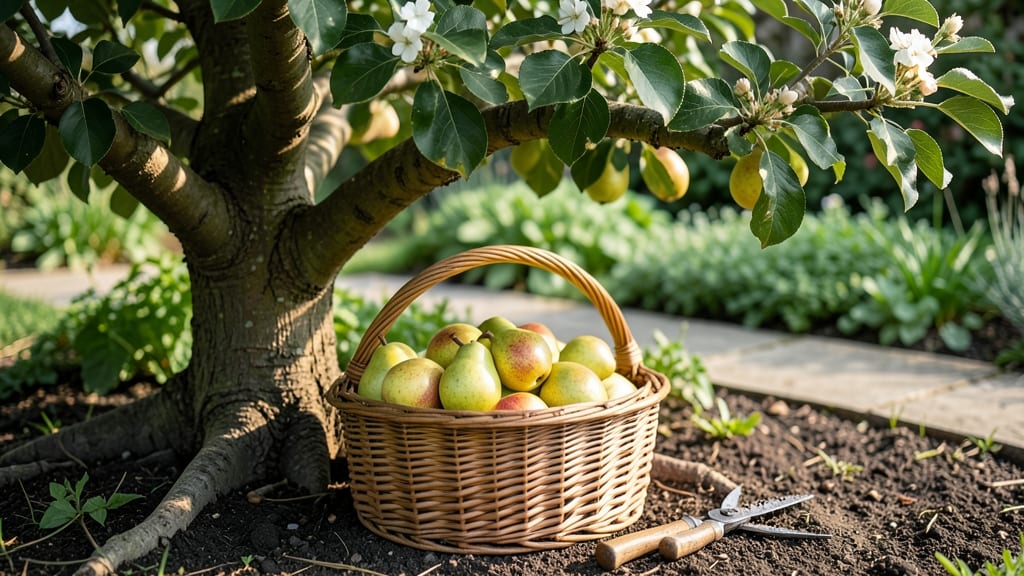
Harvesting pears at the right time in their season makes all the difference between sweet, juicy fruit and something that tastes like cardboard 🍐.
Timing your pear harvest perfectly ensures juicy, flavorful fruit—but miss the window, and you’ll end up with mealy pears or wasted labor. Here’s how to master the art of picking pears at their peak.
In General (USDA Zone 6 default), late summer to early fall is when your Bartletts and Boscs reach their prime, but climate and variety play a huge role. A warm summer might speed things up, while cooler weather keeps pears hanging longer.
Below, I’ll break down the exact signs to watch for—color, texture, and even scent—plus how to store them afterward so they stay fresh for weeks.


When is pear harvest season? Key dates by variety
Pears are one of the most rewarding fruits to grow, but knowing when to harvest can make all the difference between sweet, juicy pears and bland, mealy ones. Unlike apples, pears don’t ripen on the tree—so timing is everything.
The harvest season varies by variety and region, but most pears reach maturity between late summer and early fall, typically August through September in the Northern Hemisphere.
Climate plays a huge role: cooler regions like USDA Zone 5 may see harvests as early as mid-August, while warmer zones like Zone 8 could extend into October.
Southern Hemisphere growers should flip these dates, aiming for February to April. Understanding your local frost dates is critical—pears won’t ripen properly after a hard frost, so plan accordingly.
Here’s a quick guide to pear harvest timing by variety, including visual cues to watch for. Remember, stem separation is the gold standard—if the fruit detaches easily from the branch, it’s ready!
| Variety | Harvest Window | Color Cues | Stem Test | Best For |
|---|---|---|---|---|
| Bartlett (Williams) | Late August - Early September | Yellow with red blush | Separates easily | Fresh eating, canning |
| Anjou | Mid-September - October | Green turning golden-yellow | Separates cleanly | Baking, fresh eating |
| Bosc | td style="padding: 10px;">Late September - OctoberGreen with russet browning | Separates with slight twist | Long storage, poaching | |
| Asian Pears (e.g., Hosui) | September - Early October | Creamy white or pale green | Firm but yields slightly | Fresh slices, salads |
| Seckel | Early August - Mid-September | Yellow with red streaks | Separates easily | Fresh eating, snacking |
The Bartlett pear, also called Williams, is the earliest to ripen and the most popular for fresh eating. Look for a yellow skin with red blush—this signals it’s time to pick.
These pears ripen quickly after harvest, so store them at room temperature for a few days to soften before refrigerating. If you miss the window, Bartletts won’t improve once picked.
Anjou pears are a favorite for baking, thanks to their firm texture and sweet-tart flavor. They ripen slightly later than Bartletts, with a green skin that turns golden-yellow. The stem separation test is crucial here—if the stem pulls away cleanly, it’s ready. Anjou pears store well for up to 6 months in a cool, dark place, making them ideal for winter baking.
Bosc pears are the classic long-storage variety, often used for poaching or eating fresh after ripening. Their green skin with russet browning is a dead giveaway. Unlike Bartletts, Bosc pears need time to ripen after harvest, so don’t refrigerate them immediately—let them sit at room temperature for 3-5 days first. Once ripe, they’ll keep for months in the fridge.
Asian pears, like Hosui, are crisp and mild, perfect for fresh eating. Their creamy white or pale green skin is a clue, but don’t rely on color alone—these pears should feel firm but slightly yielding when gently squeezed.
They ripen on the tree, so pick them when fully sized and the stem separates easily. Asian pears store well for 2-3 weeks in the fridge.
Regional climate matters more than you might think. In cooler climates (Zones 3-5), pears may ripen 2-3 weeks earlier due to shorter growing seasons. Conversely, warmer zones (Zones 7-9) can extend the harvest into late October or November.
Always check your local last frost date—pears won’t ripen properly if exposed to frost, so plan to harvest before temperatures dip below 32°F (0°C).
Pro tip: If you’re unsure whether a pear is ready, pick it and store it at room temperature for a few days. Most pears (except Bartletts) will ripen off the tree, giving you a second chance to enjoy them at peak flavor.
Just avoid refrigerating unripe pears—cold slows ripening and can make them mealy.
Finally, don’t forget that pear trees produce fruit on spurs, so avoid over-pruning in late summer. This ensures next year’s harvest will be just as bountiful. With these tips, you’ll never miss the perfect pear harvest window again!
How to test for perfect ripeness: 5 proven methods
Picking pears at the right moment transforms your harvest from mealy disappointments to bursting sweetness. Unlike some fruits, pears often ripen off the tree, so timing matters. I’ve tested these five foolproof methods over years of orchard work—and they never fail.
First, understand that color alone isn’t enough. A Bartlett might turn golden while still hard as a rock, while a Bosc stays green until days after ripening. That’s why you need a multi-step approach. Start by checking these visual and tactile cues before making your final call.
- 1. Stem Twist Test: Gently grasp the pear’s stem and twist. If it detaches cleanly (like unscrewing a jar lid), it’s ready. Resistance means wait 3-5 days.
- 2. Color Shift: Look for variety-specific hues. Bartletts deepen to golden-yellow, while Bosc pears develop dusky russet spots. Compare to ripe pears from your local market.
- 3. Gentle Squeeze: Press your thumb into the pear’s flesh. A ripe pear yields slightly (like a ripe avocado) but doesn’t feel mushy. Hard = unripe; soft = overripe.
- 4. Scent Check: Hold a pear near your nose. A ripe pear emits a sweet, floral aroma. No smell? It’s not ready yet—even if the color looks perfect.
- 5. Size Stability: Measure a few pears weekly. Once they’ve stopped growing for 2+ weeks, they’re ready. Use a tape measure or compare to last year’s harvest.
Here’s where most gardeners go wrong: picking too early for post-harvest ripening. Some varieties (like Anjou) need 1-2 weeks off-tree to soften fully. Store them in a paper bag with an apple—the apple’s ethylene gas speeds up ripening naturally.
For Asian pears, skip the stem test—they ripen on the tree. Instead, focus on firmness and crispness when bitten. These pears won’t soften after picking, so harvest only when fully mature.
Pro tip: Harvest in the morning when temps are cool. Pears picked in hot afternoons bruise faster and ripen unevenly. Use pruning shears to avoid crushing the fruit—never pull by the stem.
Now you’re ready to pick like a pro. Grab a basket, head to the orchard, and apply these tests. Your perfectly ripe pears will thank you—sweet, juicy, and bursting with flavor.