
Planting
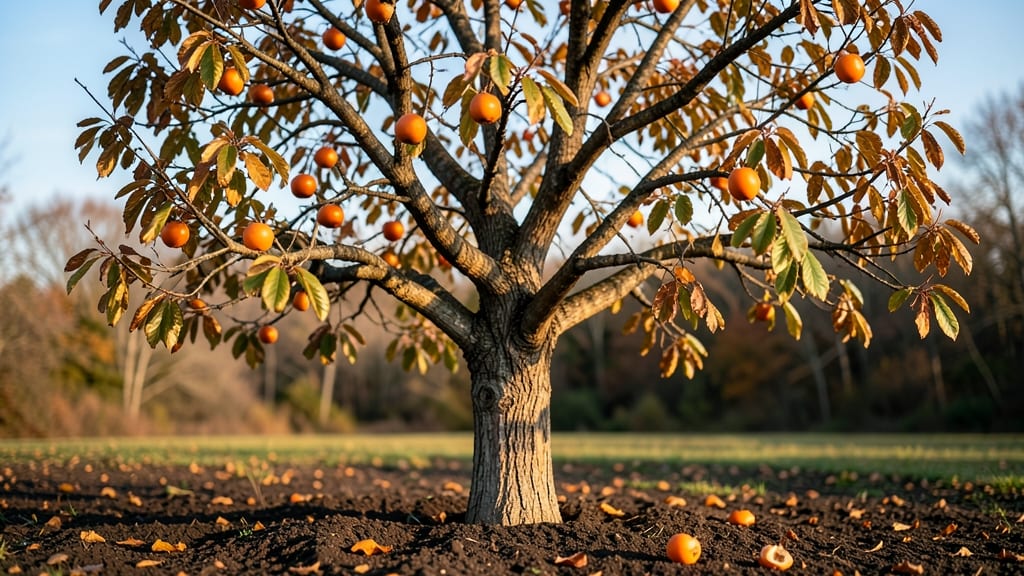
Persimmons thrive in USDA hardiness zones 5 through 9, with cold-hardy varieties like 'Meader' surviving down to zone 4. Young trees need winter protection, while mature specimens tolerate frost once established. Southern varieties prefer warmer climates (zones 7-9) to prevent premature leaf drop.
Understanding persimmon hardiness means knowing how cold temperatures affect their growth stages. 🌱 Young trees in zones 4-5 need extra care during winter, as their roots and buds are still developing. Mature trees, however, develop thicker bark and deeper roots that naturally insulate against cold.
For example, 'Fuyu' persimmons (common in zones 7-9) struggle in freezing conditions, while 'Meader' varieties handle frost better due to their genetic resilience. The key difference lies in their native climates—American persimmons evolved in colder regions, while Asian varieties prefer milder winters.
Even within the same zone, microclimates play a huge role. A south-facing slope or well-drained soil can push a tree one zone harder, while a low-lying area with poor drainage might require extra protection.
I always recommend testing your local winter lows—if you're on the edge of zone 5, a cold snap could push your tree into survival mode. For gardeners in marginal zones, winterizing with mulch or frost cloth can make all the difference between thriving and struggling.
💡 In This Article
- USDA Zone Breakdown for Persimmon Tree Cultivation
- Winterizing Persimmon Trees: Protection by Zone
USDA zone breakdown for persimmon tree cultivation
Persimmon hardiness hinges on their ability to withstand winter chilling requirements and frost damage. The USDA zones 5-9 represent the sweet spot where persimmons can complete their life cycle, but the science gets fascinating when you look at their biological adaptations.
American persimmons (Diospyros virginiana) evolved in colder climates, developing a natural resistance to -15°F to -20°F temperatures once mature—equivalent to zones 4-5. Their secret? A deep taproot system that insulates the trunk and a bark layer that thickens over time, acting like natural thermal protection.
The difference between cold-hardy American varieties and heat-sensitive Asian persimmons (Diospyros kaki) comes down to their native ecosystems. Asian persimmons thrive in zones 7-9 where winters rarely drop below 15°F, making them vulnerable to freeze damage. Their thinner bark and shallower roots can't handle prolonged cold snaps.
For example, the popular 'Fuyu' variety—common in Southern gardens—can suffer bud death if exposed to 20°F for more than 24 hours. This is why gardeners in zone 6 often need to choose between cold-tolerant American types or risk winter dieback with Asian varieties.
Frost-free periods matter just as much as cold tolerance. Persimmons need 120-150 days of warm weather to set fruit properly, which explains why northern limits (zone 5) often produce smaller harvests. The tree's flowering cycle is triggered by winter chilling hours—typically 500-1,000 hours below 45°F—which helps break dormancy.
In zone 9, where winters are mild, some varieties may fail to flower properly if they don't get enough cold exposure, leading to poor fruit set. This is why 'Meader' persimmons excel in zone 4—they've adapted to shorter growing seasons and longer winters.
Root development plays a crucial role in winter survival. Young persimmon trees in zones 4-5 need at least 2-3 years to establish a strong root system before they can handle winter conditions.
Their roots grow best in well-drained soil with a pH of 6.0-7.0, which helps prevent frost heaving—a condition where freezing and thawing cycles lift roots out of the ground.
In contrast, mature trees with established root systems can survive -20°F temperatures because their roots act as a natural heat sink, protecting the trunk from extreme cold.
Consider these key factors when selecting persimmons for your zone:
- Zone 4-5: Choose American varieties like 'Meader' or 'Pecan' that handle -20°F with proper winter care
- Zone 6-7: Opt for hybrid varieties like 'Tennessee Red' that balance cold tolerance with fruit production
- Zone 8-9: Asian persimmons like 'Fuyu' or 'Hachiya' thrive but need protection from unexpected cold snaps
What most gardeners don't realize is that persimmons actually benefit from some winter cold—the chilling process improves fruit flavor and sweetness. The longer the winter, the sweeter the fruit becomes, which is why zone 5 persimmons often develop more intense flavors than their zone 9 counterparts.
This biological quirk means that colder climates can actually produce higher-quality fruit, though yields may be smaller. 🌟