
Planting
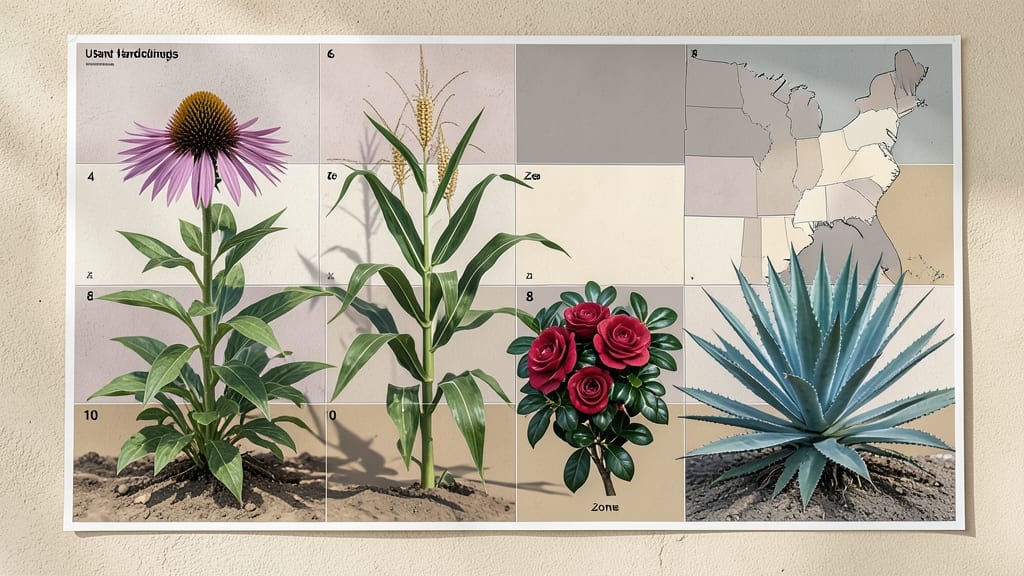
Plant gardening zones help you select plants that will thrive in your climate by mapping average minimum winter temperatures. The USDA Plant Hardiness Zone Map divides regions into 13 zones based on 10°F increments, guiding which plants can survive year-round in your location.
Understanding your plant hardiness zone is like having a climate-based cheat sheet for gardening success.
The USDA system breaks down regions into 13 zones based on the coldest average winter temperatures, helping you avoid planting tropical species in freezing climates or delicate flowers in scorching heat. 🌱 For example, Zone 5 (average lows of -10°F to -20°F) can grow hearty perennials like coneflowers, while Zone 9 (20°F to 30°F) suits citrus trees and bougainvillea.
Microclimates—like sunny south-facing walls or shaded valleys—can even shift your effective zone by 1-2 levels, so always verify with local data.
To find your exact zone, start with the USDA interactive map (available online) and enter your address. For precision, cross-check with your local cooperative extension office or weather station records. Urban areas often run warmer than rural zones due to concrete and pavement, while high elevations may experience colder microclimates.
Pro tip: Use smartphone apps like PlantSnap or Gardenate for on-the-go zone lookups and plant recommendations tailored to your location.
💡 In This Article
- What USDA Plant Hardiness Zones Mean for Your Garden
- How to Locate Your Exact Gardening Zone Number
What USDA plant hardiness zones mean for your garden
The USDA Plant Hardiness Zone Map divides North America into 13 zones based on the average annual minimum winter temperatures. Each zone represents a 10°F difference—for example, Zone 5 ranges from -10°F to -20°F, while Zone 9 spans 20°F to 30°F.
These temperature thresholds determine which plants can survive your area's coldest winters, as most plants enter dormancy when temperatures drop below their tolerance level. 🌡️ The system was developed by the U.S. Department of Agriculture to standardize plant selection across diverse climates, ensuring gardeners don't waste resources on species that will freeze or struggle to thrive.
Why does this matter? Plants have evolved to withstand specific temperature ranges. A tropical hibiscus (Zone 10-11) planted in Zone 4 (-30°F to -20°F) will die back to the ground in winter, while a hardy peony (Zone 3-8) will flourish.
The zone system also accounts for the fact that plants need 3-4 weeks of consistent cold temperatures to complete dormancy cycles—something tropical plants simply can't handle. For instance, citrus trees (Zone 9-11) require winter lows above 20°F, while apple trees (Zone 3-8) can survive -30°F with proper winter care.
Microclimates—small areas with unique temperature or moisture conditions—can shift your effective zone by 1-2 levels. A south-facing wall might be 5-10°F warmer than the surrounding area, allowing you to grow plants one zone harder than your official zone. Conversely, low-lying areas or shaded spots can be 2-5°F colder.
Urban areas often experience urban heat islands, where pavement and buildings trap heat, pushing zones up by 1-3 levels. For example, a garden in Zone 6 (-10°F to 0°F) might safely grow Zone 7 plants (-5°F to 0°F) in a sunny, sheltered microclimate.
Here's how to interpret the zones practically: If you're in Zone 7a (-5°F to 0°F), you can grow plants rated for Zones 7-9, but you'll need to protect tender Zone 9 plants (like elephant ears) with mulch or containers during cold snaps.
Conversely, if you're in Zone 3b (-35°F to -30°F), you'll focus on cold-hardy perennials like Russian sage (Zone 4-9) or crabapples (Zone 3-8), while avoiding anything rated below Zone 3. The key is matching the lowest winter temperature your plants can tolerate.
The 10°F increments between zones might seem arbitrary, but they reflect real-world plant survival thresholds. For example, the difference between Zone 5 (-20°F) and Zone 6 (-10°F) can mean the difference between a surviving peach tree (Zone 5-9) and a frozen one.
Similarly, a Zone 8 garden (10°F to 15°F) can support olive trees (Zone 8-10), while a Zone 7 garden (0°F to 10°F) might only get young, protected olives that struggle to fruit reliably. Always check the minimum temperature for your zone, not just the zone number itself.
Pro tip: Use the USDA Plant Hardiness Zone Map as a starting point, but verify with local records. Your county extension office often has hyper-local data that accounts for microclimates and recent climate shifts.
For instance, many areas have moved into warmer zones over the past decade due to climate change—what was once Zone 6 might now be Zone 7. Adjusting for these changes ensures your garden stays ahead of the curve. 🌱