
Planting
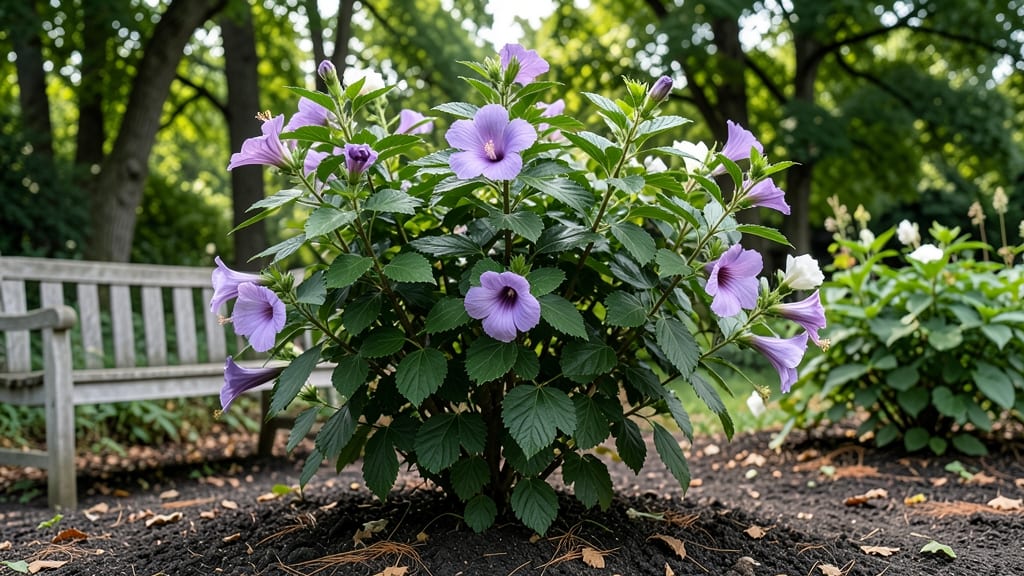
The Rose of Sharon thrives in USDA Zones 5 through 9, handling cold down to -20°F (-29°C) but needing extra winter care in colder areas. Strategic pruning and mulching boost its cold resistance for consistent blooms.
This hardy shrub's cold tolerance comes from its thick, woody stems that store moisture and nutrients, helping it survive winter dormancy. 🌡️ In Zones 5-7, you'll often see it thriving without protection, but the real test comes in Zones 4 and below where even brief dips below -20°F can cause damage.
I've found that adding a thick layer of mulch around the base—at least 4-6 inches deep—can push its survival range by 3-5°F, making all the difference in marginal climates.
What sets Rose of Sharon apart is its ability to regrow from the base even after severe cold damage. The key is timing: prune back dead stems in early spring before new growth appears, and avoid heavy pruning in fall when the plant is already preparing for dormancy.
For extra protection in harsh winters, wrapping the shrub with burlap or frost cloth can prevent windburn and frost damage to tender new growth.
💡 In This Article
- Understanding Rose of Sharon Cold Hardiness by USDA Zone
- Winter Care for Rose of Sharon in Cold Zones
Understanding Rose of Sharon cold hardiness by USDA Zone
The Rose of Sharon's cold hardiness stems from its deep winter dormancy cycle, where its thick, multi-branched stems store energy reserves like a natural battery.
These woody stems can survive temperatures down to -20°F (-29°C) because their vascular system slows nearly to a halt, preventing frost damage to the internal tissues. 🌡️ The roots, which extend 12-18 inches deep, also play a crucial role by accessing groundwater that stays liquid even when surface temperatures drop.
In USDA Zone 5, where winters average 0-10°F (-18 to -12°C), Rose of Sharon typically thrives with minimal protection, thanks to its natural cold adaptation. However, the real challenge comes in Zone 4 (-30°F/-34°C), where prolonged exposure below -20°F can cause stem dieback.
The plant's survival strategy shifts here—it prioritizes root and bud protection over stem preservation, which is why you'll often see new growth emerging from the base even after severe cold events.
Regional climate patterns significantly influence how Rose of Sharon performs. In the Upper Midwest (Zone 4), where cold snaps can drop to -35°F (-37°C), the plant's hardiness is tested by both temperature and wind chill.
The combination of cold air and wind can push the effective temperature 10-15°F colder than the thermometer reading, making windbreaks essential.
Meanwhile, in the Pacific Northwest (Zone 7-8), where winters are wetter, the real threat isn't cold but rot from prolonged moisture—this is why proper drainage becomes just as critical as temperature management.
What most gardeners don't realize is that Rose of Sharon's cold tolerance varies by cultivar. For example, 'Useless' series varieties are bred for 5°F extra hardiness compared to standard types, making them ideal for Zone 4 gardens.
The difference lies in their genetic makeup, which includes thicker bark and denser stem tissue that resists cracking in freezing conditions. 🌿 This is why selecting the right cultivar for your zone can mean the difference between a thriving shrub and one that struggles to recover each spring.
Another key factor is the plant's age—younger shrubs (under 3 years) are more vulnerable to cold damage because their root systems haven't fully developed. In these cases, adding an extra 2-3 inches of mulch in the first winter can make a dramatic difference in survival rates.
The mulch acts like a thermal blanket, insulating the soil and keeping root zone temperatures 5-10°F warmer than ambient air temperatures.
Here's what happens during dormancy: As temperatures drop below 40°F (4°C), the plant's growth hormones shut down, and its cells produce antifreeze proteins that prevent ice crystals from forming in its tissues.
This biological adaptation is similar to how some fish survive in Arctic waters—both rely on specialized proteins to protect their cells from freezing. The result? A shrub that can sit dormant for months and still burst back to life with vibrant blooms when spring arrives.