
Propagation
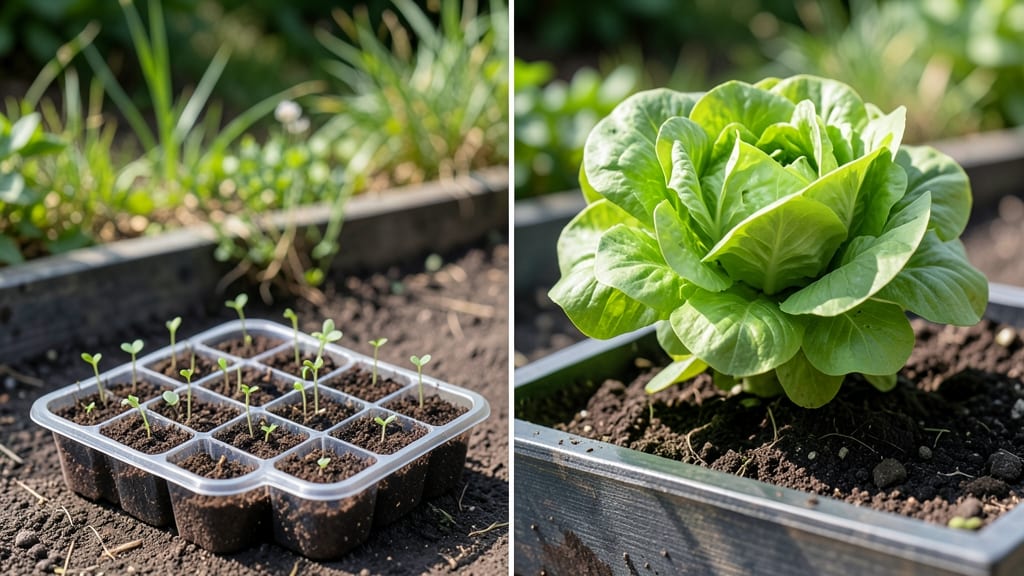
Planting seeds of season at the right time maximizes yields by aligning with your region’s frost dates and climate zones. Start cool-season crops like lettuce 4-6 weeks before last frost, while warm-season plants like tomatoes need soil at 60°F+ after frost risk passes. Adjust timing for high-altitude or coastal areas by 2-4 weeks.
Timing your planting schedule around your local climate is the secret to bountiful harvests. 🌱 The USDA's plant hardiness zones provide a great starting point, but real-world conditions like microclimates and elevation can shift your ideal planting window by weeks.
For example, gardeners in Zone 5 might start cool-season crops in early April, while those in Zone 10 can plant year-round with minimal frost concerns. Even within the same region, urban areas often experience heat islands that delay frost, so checking your specific frost date is crucial.
Beyond zones, understanding your soil's readiness matters just as much. Warm-season crops like peppers and cucumbers won't thrive until the ground reaches 60°F—waiting for that temperature ensures strong root development.
Meanwhile, cool-season crops planted too early may bolt in heat, so that 4-6 week buffer before last frost gives them time to establish before summer arrives. For high-altitude gardens, where cooler temperatures linger, I recommend pushing back planting dates by 2-4 weeks to avoid stunted growth.
💡 In This Article
- How Climate Zones Determine Seed Planting Timing
- Regional Seed Planting Calendar for Peak Harvests
How climate zones determine seed planting timing
The USDA plant hardiness zones map divides North America into 13 zones based on average annual minimum temperatures. Each zone represents a 10°F range, with Zone 1 being the coldest (-60°F) and Zone 13 the warmest (100°F).
This system helps gardeners predict when their last spring frost will occur, which is the critical factor for cool-season crops. For example, Zone 5 (typical of Chicago or Denver) averages its last frost around April 15, while Zone 10 (Southern California) rarely sees frost at all.
The zone map accounts for latitude but doesn't fully capture altitude effects—high-altitude areas in Zone 7 (like Colorado Springs) can have frost dates similar to Zone 4 gardens at sea level.
Frost dates are calculated using a 30-year average of the last occurrence of 28°F temperatures in spring and first occurrence in fall. However, real-world frost can arrive weeks earlier or later due to microclimates.
Urban areas often experience urban heat islands where concrete and pavement retain heat, delaying frost by 1-2 weeks compared to rural areas just miles away. Coastal regions also have unique patterns—Pacific Northwest gardens may see foggy mornings that protect plants from frost even when inland areas freeze.
The key is to track your local frost dates using tools like the National Oceanic and Atmospheric Administration's frost prediction models, which factor in current weather patterns rather than relying solely on historical averages.
Planting timing also depends on whether you're growing early, mid, or late season varieties. Early crops like spinach or radishes can tolerate light frosts and should be planted 4-6 weeks before your last frost date to establish roots before summer heat arrives.
Mid-season varieties (like broccoli) need 3-4 weeks before frost, while late-season crops (such as kale) can handle 2 weeks of frost exposure. Warm-season crops like tomatoes and peppers, however, require soil temperatures above 60°F—a threshold that's often 2-4 weeks later than frost-free dates in cooler zones.
This is why gardeners in Zone 5 might not plant tomatoes until May 15, even if frost risk has passed earlier.
Altitude plays a particularly dramatic role in planting timing. For every 1,000 feet increase in elevation, temperatures drop by about 3.5°F, which can shift frost dates by 1-2 weeks per 1,000 feet.
A gardener in Denver (Zone 5) at 5,280 feet might experience frost patterns similar to a Zone 3 garden at sea level. Conversely, coastal areas at lower elevations (like San Francisco) can have frost dates 3-4 weeks later than inland areas just 50 miles away.
To account for this, I recommend using the USDA zone calculator combined with your local weather station data for precise adjustments.
Microclimates create another layer of complexity. A south-facing slope gets 2-3 hours more sunlight daily than a north-facing one, warming soil faster in spring. This can create a 10°F difference between two spots just 100 feet apart.
Similarly, bodies of water (lakes, rivers) moderate temperatures, keeping nearby areas 5-10°F warmer in winter and cooler in summer. These variations mean your garden's microclimate might require custom timing that differs from your official USDA zone.
For example, a garden near a large lake in Zone 6 might successfully grow tomatoes 2 weeks earlier than a garden 5 miles inland.
Here's what this means for your planting strategy: Start by identifying your USDA zone, then adjust for altitude using the 3.5°F per 1,000 feet rule. Next, observe your local frost dates for 3 years to account for microclimates.
Finally, use soil thermometers to verify when your ground reaches 60°F for warm-season crops—this is often the limiting factor, not just frost dates. By combining these factors, you'll create a planting schedule tailored to your specific conditions, not just your zone number. 🌿