
Container Gardens
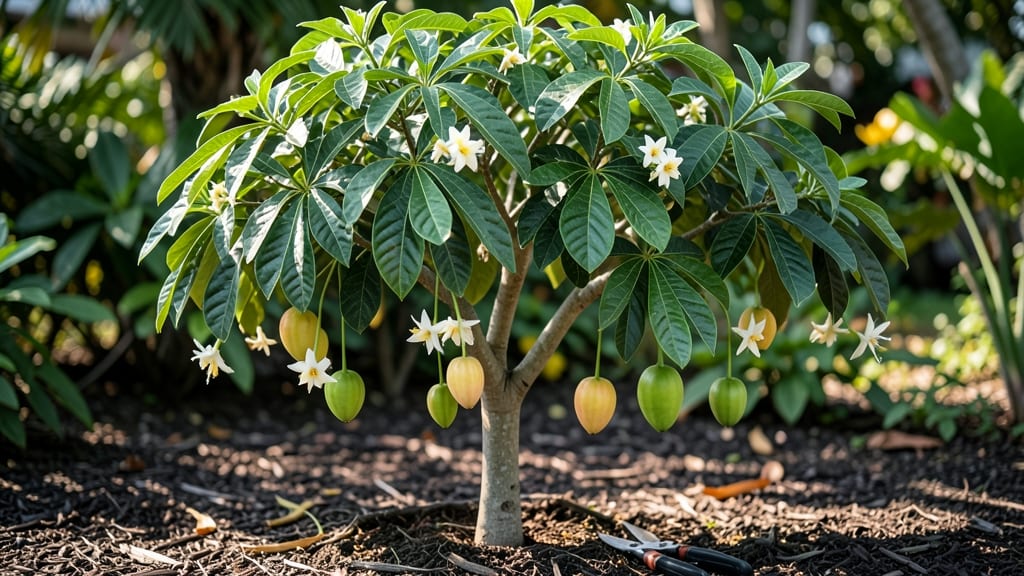
Star fruit trees grow best in USDA zones 10 through 12, where warm temperatures above 30°F (-1°C) protect them from frost damage. These tropical/subtropical regions offer the consistent heat and humidity needed for healthy growth and fruit production.
Native to Southeast Asia, star fruit trees evolved in hot, humid environments where temperatures rarely dip below 50°F (10°C). 🌴 The fruit itself develops best when daytime highs reach 75-90°F (24-32°C), which is why coastal areas often provide ideal conditions.
Even in marginal zones, microclimates—like sunny south-facing walls or greenhouse setups—can create pockets of warmth that extend the growing window significantly.
What many gardeners don't realize is that these trees can actually tolerate brief dips to 28°F (-2°C) if they're mature, but younger plants or flowering/fruiting branches are far more vulnerable.
This is why container growing becomes a game-changer in cooler climates—you can simply move the pot indoors during winter months and bring it back outside when temperatures stabilize.
💡 In This Article
- Understanding Star Fruit Tree Climate Requirements
- Extending Star Fruit Tree Growing Zones with Smart Gardening
Understanding star fruit tree climate requirements
The star fruit tree, scientifically known as Averrhoa carambola, originates from tropical Southeast Asia where it thrives in environments with consistent warmth and high humidity. These trees evolved in regions where temperatures rarely drop below 50°F (10°C), making them highly sensitive to frost.
The tree's metabolic processes, particularly photosynthesis and respiration, operate optimally between 75-90°F (24-32°C), which explains why USDA zones 10-12 provide perfect conditions for growth and fruiting.
Humidity plays a crucial role in star fruit cultivation. The tree prefers 60-80% relative humidity, which helps prevent leaf drop and maintains the tree's vibrant green foliage.
Coastal areas naturally provide this moisture through ocean breezes and mist, while inland growers may need to supplement with regular misting or drip irrigation systems. Sunlight requirements are equally critical—star fruit trees need full sun exposure (6-8 hours daily) to produce the energy needed for flowering and fruit development.
Temperature thresholds become particularly important during the flowering and fruiting stages. When nighttime temperatures drop below 60°F (15°C), pollen viability decreases significantly, reducing fruit set. This is why tropical and subtropical regions with stable temperatures year-round yield the best harvests.
Even in ideal zones, sudden temperature swings—like those caused by cold fronts—can stress the tree and lead to premature fruit drop.
Microclimates offer a strategic advantage for gardeners in marginal zones. A south-facing wall can create a 5-10°F warmer microclimate compared to open garden areas, while a greenhouse or cold frame can extend the growing season by 2-3 months in cooler regions.
These microclimates work by trapping heat during the day and releasing it slowly at night, creating a buffer against temperature extremes that would otherwise damage the tree.
What most growers overlook is the tree's root system sensitivity. Star fruit trees develop a shallow but extensive root network that thrives in well-draining, slightly acidic soil (pH 5.5-6.5).
In cooler climates, this root system can be particularly vulnerable to temperature fluctuations in the soil, which is why mulching with 3-4 inches of organic matter helps insulate the roots and maintain consistent temperatures year-round.
Consider these key environmental factors when evaluating your growing conditions:
- Minimum temperature: 30°F (-1°C) for mature trees, but 40°F (4°C) for optimal growth
- Ideal daytime temps: 75-90°F (24-32°C) for flowering and fruiting
- Humidity needs: 60-80% relative humidity to prevent leaf stress
- Sunlight requirement: 6-8 hours of direct sunlight daily
- Soil temperature: Should stay above 55°F (13°C) for root activity
Understanding these climate requirements helps explain why star fruit trees struggle in colder regions—they simply can't adapt to temperature fluctuations that fall outside their evolutionary comfort zone. 🌿