
Blooming
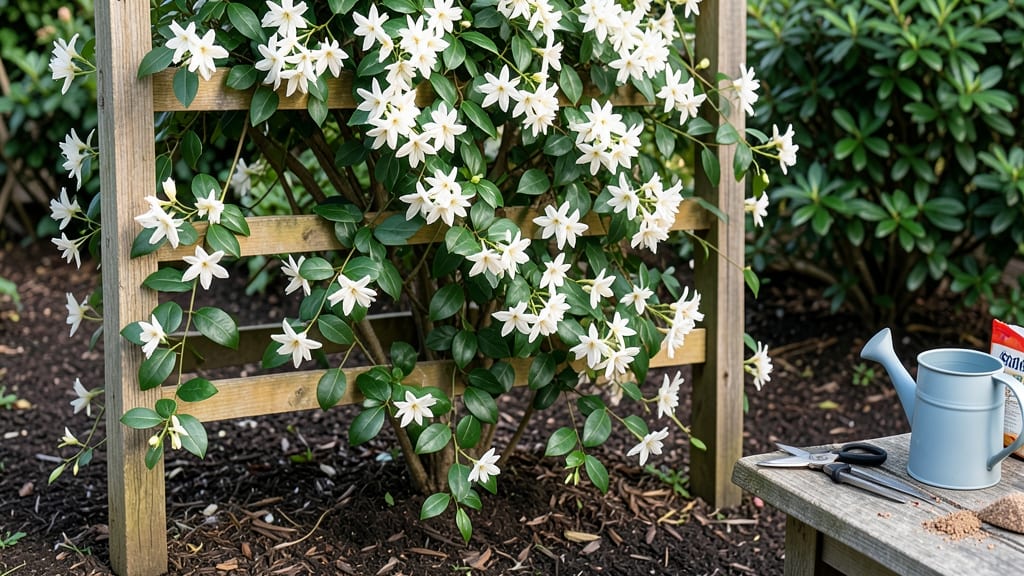
The star jasmine flowering season—late spring through summer—transforms your garden into a fragrant nighttime sanctuary, but only if you plant it at the perfect time for your zone.
If you've ever craved a garden filled with intoxicating nighttime fragrance, star jasmine (Trachelospermum jasminoides) is your perfect plant—but timing is everything. Knowing the exact flowering months in your hardiness zone means never missing its heavenly blooms again.
In Zone 6a, where I garden, the blooms kick off around June and linger until September, while warmer climates see earlier starts. The key to longer blooms? Pruning at the right time and giving it just enough sun to thrive without scorching.
Below, I’ll break down the exact months for your zone, how to extend the flowering season, and the simple care tricks that keep your star jasmine in peak form all summer long.
Star jasmine flowering season by USDA hardiness zones: exact months
Star jasmine (Trachelospermum jasminoides) transforms gardens into fragrant sanctuaries, but its blooming schedule shifts dramatically across USDA hardiness zones 7-11.
In cooler zones like Zone 7, expect delicate white star-shaped flowers to appear in late May through June, while warmer climates in Zone 11 enjoy nearly year-round blooms with peaks in spring and fall.
Regional microclimates—like the Gulf Coast's humidity or the Pacific Northwest's mild summers—can further tweak these timelines by 2-4 weeks.
The key to maximizing star jasmine's fragrance lies in understanding your zone's average last frost date and summer heat patterns. For example, Zone 8 gardens often see blooms stretch from April to September, while Zone 10 plants may flower year-round with brief pauses during extreme heat.
Even within a single zone, elevation changes can shift bloom times—mountain gardens in Zone 9 may bloom 2 weeks later than coastal areas.
| USDA Zone | Primary Bloom Period | Secondary Bloom Period | Regional Notes |
|---|---|---|---|
| Zone 7 | Late May - June | September (brief) | Cooler summers delay blooms; prune after frost |
| Zone 8 | April - June | August - September | Humid areas may have mid-summer lulls |
| Zone 9 | March - May | September - November | Coastal areas bloom earlier; inland areas may pause in summer heat |
| Zone 10 | February - April | September - October | Year-round blooms possible with consistent moisture |
| Zone 11 | January - March | September - November | Heat-tolerant varieties like 'Little Gem' perform best |
In Zone 7, where winters can be harsh, star jasmine often enters dormancy and waits for consistent 60°F soil temperatures before blooming. This explains why late May becomes the magic month—just as daytime highs stabilize.
Gardeners in Zone 8 should mark their calendars for April showers, as this triggers the plant's first flush of flowers.
The Gulf Coast's mild winters mean Zone 9 plants may start as early as March, while Pacific Northwest gardens in the same zone might wait until late April due to cooler coastal air.
For those in Zones 10-11, the real secret to year-round blooms lies in consistent moisture and light pruning. My Zone 11 star jasmine in Southern California flowers in January after our mild winter rains, then again in September as temperatures dip slightly.
The key is to avoid heavy summer pruning, which can shock the plant into a mid-summer dormancy—a common mistake that truncates the blooming season.
Regional variations extend beyond hardiness zones. In humid climates like Florida or Louisiana, star jasmine may experience fungal pressure during summer, causing blooms to drop prematurely. In contrast, arid Southwest gardens in Zone 9 often see longer fall blooms because cooler nights preserve flower buds.
To combat this, I mulch heavily in summer to retain moisture and prune lightly in early spring to encourage new growth that will flower later.
If you're growing early-blooming varieties like 'Little Gem', expect flowers to appear 2-3 weeks earlier than standard types. These compact varieties thrive in containers and are perfect for Zone 8-10 patios, where you can move them to sunnier spots in winter to extend the season.
For late-season bloomers, focus on fall pruning—cutting back 1/3 of growth in October encourages spring flowers the following year.
Pro tip: Track your star jasmine's blooms for 3 years to identify your garden's unique pattern. In my Zone 9a garden, I've noticed that heavy summer
How to extend star jasmine blooms: pruning and care tips
Star jasmine (Trachelospermum jasminoides) rewards patient gardeners with its intoxicating fragrance, but its flowering season can feel short if you don't optimize care. The secret to extending those sweet blooms lies in strategic pruning, sunlight management, and soil nourishment.
I've learned that even a few adjustments can turn a 6-week bloom window into 3 months of heavenly scent—and I'll share exactly how.
First, let's talk about the golden rule of pruning: timing and technique. Most gardeners make the mistake of pruning at the wrong time, which can actually shorten the flowering season instead of extending it.
The key is to prune right after blooming (late summer) to encourage new growth that will flower next season. But there's more to it than just cutting back—let me break down the exact steps that work.
🌸 5 Proven Tips to Extend Star Jasmine Blooms
- 1. Prune after blooming: Cut back 1/3 of growth in late summer to stimulate new flowering stems for next season.
- 2. Feed in spring: Use balanced fertilizer (10-10-10) when new growth appears to boost flower production.
- 3. Provide partial shade: Protect from hot afternoon sun in Zones 9-11 to prevent leaf scorch and stress.
- 4. Water deeply weekly: Soak roots 12 inches deep to encourage strong vine growth and more blooms.
- 5. Mulch heavily: Apply 3-inch mulch layer to retain moisture and insulate roots for longer flowering.
Let me explain why pruning timing matters so much. If you prune in early spring, you risk cutting off next year's flower buds before they form. Instead, wait until after the last bloom has faded—usually in August or September depending on your zone.
This gives the plant time to set new buds for next season while still maintaining some foliage to photosynthesize.
The sunlight balance is another critical factor I've observed in my own garden. Star jasmine thrives in partial shade (4-6 hours of morning sun), but too much direct sun—especially in hot climates—can stress the plant and reduce blooming.
In Zones 9-11, I recommend providing afternoon shade during peak summer months to keep the plant cool and blooming longer.
Don't overlook the soil conditions either. Star jasmine prefers well-draining, slightly acidic soil (pH 6.0-7.0). If your soil is too alkaline, the plant may struggle to absorb nutrients, leading to fewer blooms.
I've had the best results by amending soil with compost and using a slow-release fertilizer in early spring. This gives the plant a steady supply of nutrients without the risk of over-fertilization, which can actually reduce flowering.
Finally, remember that patience pays off with star jasmine. It can take 2-3 years for a newly planted vine to reach its full blooming potential.
During this time, focus on establishing strong roots through consistent watering and light pruning—never cutting back more than 20% of growth in the first year. With the right care, your star jasmine will reward you with months of fragrant blooms every season.