
Planting
Georgia's climate zones reflect its diverse geography, where elevation and coastal influences create distinct growing conditions. Northern counties experience earlier frosts and shorter growing seasons, while coastal areas enjoy milder winters and longer planting windows.
For instance, mountain regions like Fannin County (Zone 7a) face harsher winters compared to Chatham County (Zone 8b) near Savannah. Understanding your specific zone helps select plants that survive local temperature extremes, from cold-hardy azaleas in the north to citrus-friendly palms in the south. 🌿
This zone variation also affects frost-free dates, which can differ by up to 4-6 weeks between northern and southern Georgia. Gardeners in Zone 7a might plant tomatoes after April 15, while Zone 8b gardeners can start as early as March 1.
The USDA zone map serves as a baseline, but local weather patterns and microclimates often require adjustments for successful gardening.
💡 In This Article
- How Georgia’s Geography Shapes Its USDA Zones
- Georgia County-by-County USDA Zone Lookup Guide
How Georgia’s geography shapes its USDA zones
Georgia’s diverse terrain—from the rugged Blue Ridge Mountains in the north to the flat coastal plains in the south—creates dramatic temperature variations that define its USDA zones.
Elevation is the primary factor: every 1,000 feet gain in altitude drops temperatures by about 3.5°F, which is why mountain counties like Fannin (Zone 7a) experience winters 10-15°F colder than coastal areas like Camden (Zone 8b).
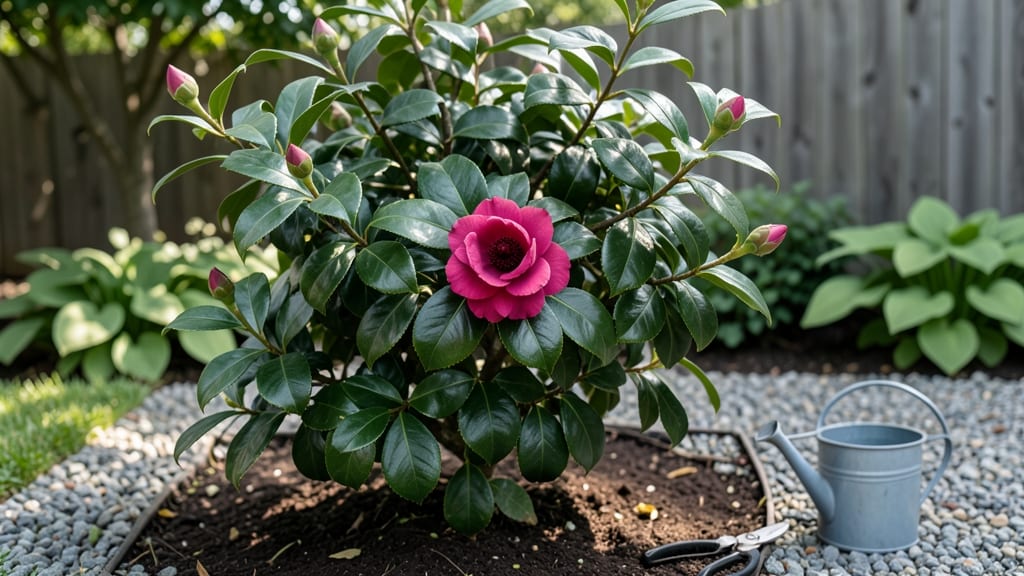
This elevation-driven cooling explains why hardy plants like blueberries (Zone 4-7) thrive in northern Georgia, while subtropical camellias (Zone 7-9) dominate the southern landscape. 🌄
The state’s latitude also plays a role: northern Georgia’s proximity to the Appalachian Plateau traps cold air, delaying spring and extending frost seasons, while southern Georgia’s lower elevation and Gulf Coast influence create milder winters.
For example, Atlanta (Zone 7b) sees 200-250 frost-free days, whereas Savannah (Zone 8a) enjoys 300+ frost-free days. These differences mean gardeners in Zone 7a must wait until mid-April to plant warm-season crops like peppers, while Zone 8b gardeners can start as early as February.
The Piedmont region, acting as a transitional zone, often blends characteristics of both extremes.
Coastal proximity introduces another layer of complexity: the Atlantic Ocean moderates temperatures along the coast, preventing extreme cold snaps that inland areas endure.
This is why Chatham County (Zone 8b) near Savannah can support olive trees (Zone 8-11), while Dade County (Zone 7a) in the northwest struggles to keep even crape myrtles (Zone 7-9) alive without winter protection.
The 100-mile rule applies here—temperatures near the coast can be 5-10°F warmer than just 100 miles inland during winter months.
Microclimates further complicate zone assignments. Urban areas like Atlanta experience the "urban heat island" effect, where pavement and buildings raise temperatures by 2-5°F compared to rural areas, potentially shifting effective zones upward by half a zone.
Conversely, valleys in the Appalachian foothills can trap cold air, creating pockets of Zone 6 conditions within otherwise Zone 7 counties. These localized variations mean that even within a single county, gardeners might need to adjust planting strategies based on their specific elevation and exposure.
Understanding these geographic influences helps gardeners select plants that match their local conditions. For instance, Zone 7a gardeners should prioritize cold-hardy varieties like 'Jersey' blueberry or 'Serviceberry', while Zone 8b gardeners can experiment with figs, citrus, or gardenias that wouldn’t survive further north.
The key is to use the USDA zone as a starting point, then observe your local frost patterns and microclimate for 3-5 years to fine-tune your plant selections. 🌱
For practical application, consider these geographic rules of thumb when selecting plants:
- Mountain regions (Zones 7a-7b): Focus on acid-loving plants (azaleas, rhododendrons) and early-blooming perennials that tolerate below-freezing temperatures for extended periods.
- Piedmont (Zone 7b-8a): Ideal for hydrangeas, crape myrtles, and peaches, which thrive in the transitional climate but may need winter mulch in colder microclimates.
- Coastal plains (Zone 8a-8b): Perfect for camellias, gardenias, and subtropical vegetables like okra and sweet potatoes, which flourish in the longer growing season.