
Companion Plants
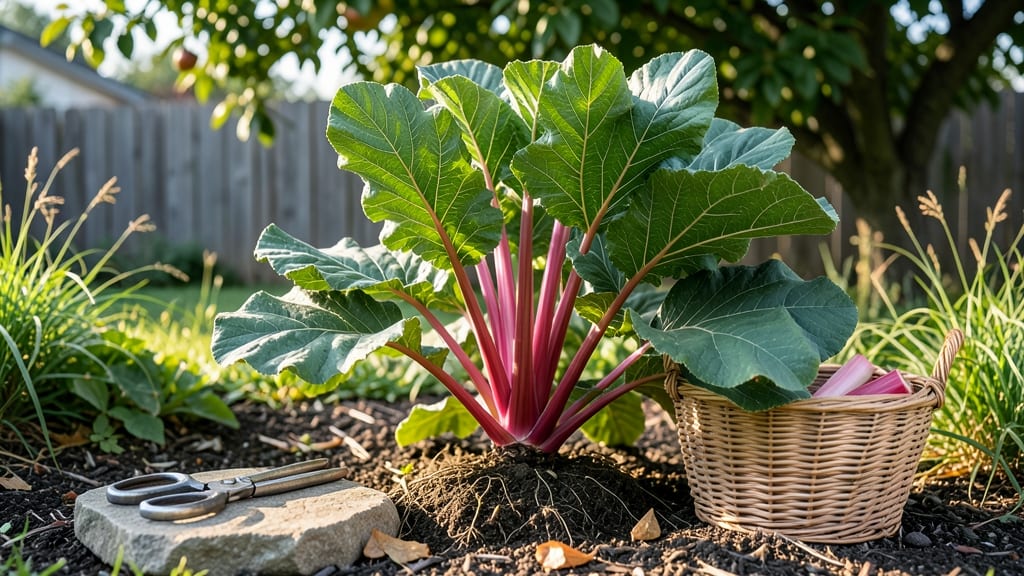
Rhubarb comes into season in late spring, typically between April and June, depending on your USDA hardiness zone—earlier in warmer zones (6-8) and later in colder regions (3-5). Frost-tolerant varieties may even produce edible stalks after light freezes, but avoid heavy frost damage before harvest.
Rhubarb’s harvest window opens when soil temperatures reach 40°F and nighttime frosts have passed, signaling the plant’s energy shift from root growth to stalk production. 🌱 In colder zones (3-5), you might wait until late May or early June, while warmer climates (7-9) can start as early as March.
The key is patience—harvesting too soon stresses young plants, while waiting too long risks tough, fibrous stalks. I’ve found that patience pays off with sweeter, more tender harvests!
For first-year plants, resist the urge to cut stalks until the crown is well-established (usually after 2 years2-3 weeks.
💡 In This Article
- How USDA Zones and Frost Dates Affect Rhubarb Harvest Timing
- Best Practices for Harvesting Rhubarb by Season and Region
How USDA zones and frost dates affect rhubarb harvest timing
Rhubarb's growth cycle is tightly linked to temperature shifts, particularly the balance between chilling requirements and frost timing. This cold-hardy perennial needs 60-100 days of temperatures below 40°F to break dormancy and trigger stalk production.
In colder zones (3-5), where winters last longer, rhubarb often waits until late May or early June to produce edible stalks because the soil takes longer to warm consistently above 40°F.
Meanwhile, in warmer zones (7-9), where winters are milder, the plant may start producing as early as March, as soon as daytime temperatures stabilize around 50°F. 🌱
The plant's ability to tolerate light frost—down to 20°F—creates a fascinating paradox: while heavy frost can damage emerging stalks, a light freeze actually enhances sweetness by converting starches to sugars.
This is why gardeners in Zone 5 often harvest after a 25-30°F frost, while those in Zone 9 might avoid frost entirely. The key difference lies in how quickly spring arrives—warmer climates experience more rapid temperature swings, while colder regions have gradual warming periods that extend the harvest window.
First-year rhubarb plants behave differently than mature ones due to their developmental stage. Young crowns (under 2 years old) focus energy on root establishment rather than stalk production, so harvesting them can stunt growth.
In contrast, mature plants (3+ years old) can handle 25-30% of their stalk production being harvested annually without stress. This is why Zone 6 gardeners might start harvesting in early April, while Zone 3 gardeners wait until late May—timing ensures the plant's energy isn't diverted from critical growth phases. 💫
Regional frost patterns create additional variables. The Pacific Northwest's marine climate brings late spring frosts that can delay harvest by 3-4 weeks, while the Midwest's continental climate often sees earlier frost-free dates.
To calculate your local window, subtract your average last frost date from your first 40°F soil temperature date—this gives you the plant's active growth period.
For example, in Zone 7, this might be a 90-day window starting in mid-March, while Zone 4's window could be 75 days starting in late April.
What most gardeners overlook is how mulching affects these timelines. A 4-6 inch layer of straw or wood chips applied in late fall can extend the harvest season by 10-14 days by insulating roots and moderating soil temperature.
This technique is particularly valuable in Zone 5-6, where spring temperature fluctuations are most dramatic. The mulch creates a microclimate that mimics the gradual warming of Zone 7 climates, allowing earlier harvests without risking frost damage. 🌿
For those in frost-prone areas, row covers become essential tools. Lightweight fabric that transmits 70-80% of sunlight while blocking wind can raise temperatures by 5-10°F, effectively shifting your harvest window 2-3 weeks earlier.
This is especially useful in Zone 4-5, where late frosts are common. The covers work by trapping heat during the day while allowing heat dissipation at night, creating a stable environment that accelerates stalk development.