
Container Gardens
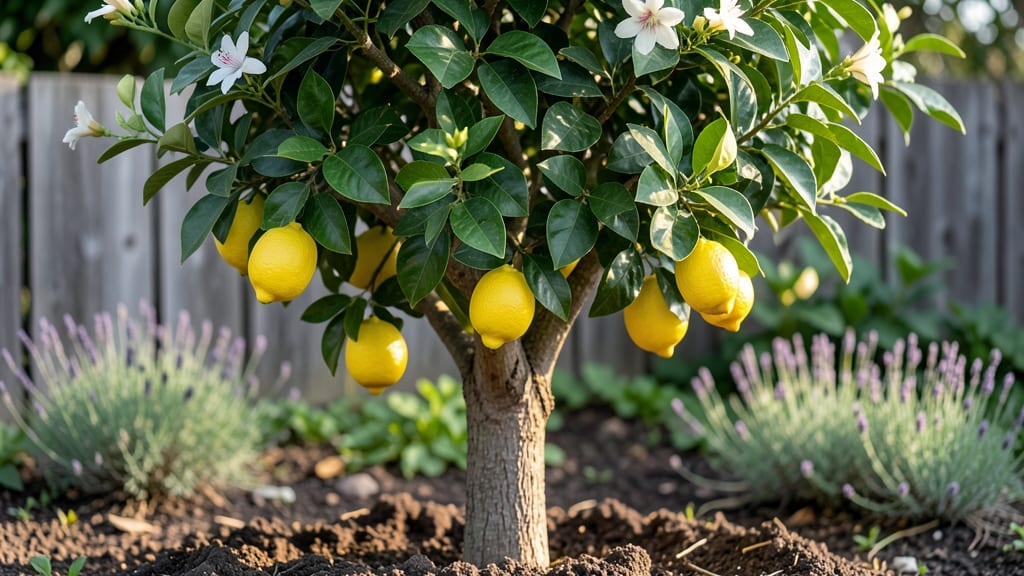
Lemon trees grow best in USDA Hardiness Zones 9-11, where warm temperatures and frost-free winters create ideal conditions. For colder climates, container growing or greenhouse protection becomes essential. Varieties like 'Meyer' and 'Eureka' are top choices for their adaptability.
If you're outside these zones, don't give up—many gardeners successfully cultivate lemons in containers or protected spaces. 🌱 The key is understanding your local microclimate; even Zone 8 areas can support lemons with the right care.
For instance, 'Meyer' lemons handle cooler temperatures better than standard varieties, making them a favorite for container growing in northern regions. Always choose dwarf varieties if space is limited, as they're easier to move indoors during winter.
Remember, lemons need at least 6-8 hours of sunlight daily and well-draining soil to thrive. In colder zones, bring potted trees inside before temperatures drop below 40°F to prevent damage. With the right variety and protection, you can enjoy homegrown lemons almost anywhere!
💡 In This Article
- Understanding USDA Zones for Lemon Tree Cultivation
- Best Lemon Varieties by Growing Zone and Climate Needs
Understanding USDA Zones for lemon tree cultivation
Lemon trees are tropical evergreens that thrive in USDA Hardiness Zones 9-11, where average winter temperatures stay above 25°F. The critical factor isn't just the zone number but the cumulative winter chill hours below 45°F—even a single night dipping to 28°F can kill an unprotected tree.
In Zone 10, for example, coastal areas like Los Angeles rarely drop below 30°F, while inland valleys may experience 25°F dips, creating microclimates that affect viability.
The tree's native habitat in northern India and China exposes it to 100-150 days of warm weather annually, with no frost periods.
This explains why lemons struggle in Zones 7-8 without protection—their leaves burn at 32°F and roots rot in saturated, cold soil. 🌡️ Even in Zone 9, inland areas like Phoenix can drop to 20°F, requiring growers to plant near heat-retaining structures or use windbreaks.
The tree's bark can survive brief cold snaps, but the evergreen leaves are the weak link.
What most gardeners overlook is how soil temperature affects root health. Lemon roots need to stay above 50°F—colder soil slows nutrient uptake and makes the tree vulnerable to fungal diseases like root rot.
This is why container growing works in cooler zones: pots can be moved to sheltered spots or garages when nighttime temperatures approach 40°F. The key threshold is 32°F for foliage damage, but roots suffer at 45°F and below.
Microclimates play a huge role in lemon cultivation. Coastal areas in Zone 8 (like parts of California) can support lemons year-round due to ocean moderation, while inland areas may need greenhouse protection. The tree's natural defense mechanism involves shedding leaves during extreme cold, but this stresses the plant.
In Zone 9, growers often prune lemons heavily in late winter to reduce foliage exposure and encourage new growth when temperatures rise above 55°F.
For those in Zones 5-8, the solution lies in container cultivation with winter protection. A 15-gallon pot allows easy movement indoors, while dwarf varieties like 'Meyer' (which tolerates 20°F for short periods) are ideal.
The trade-off is smaller fruit yield—expect 20-30 lemons annually from a dwarf versus 100+ from a standard tree in Zone 10. The secret is maintaining consistent moisture (but never soggy soil) and providing 6-8 hours of direct sunlight daily, even during winter months.
Here's what happens when lemons face cold stress: leaves turn black and crispy at 28°F, while stems and branches may survive but produce no fruit the following season.
The tree's flowering cycle is also disrupted—lemon trees need 70-80°F days to set fruit, which explains why Zone 9 growers often see reduced yields after a cold snap. This biological response highlights why microclimate selection is critical for success.