
Planting
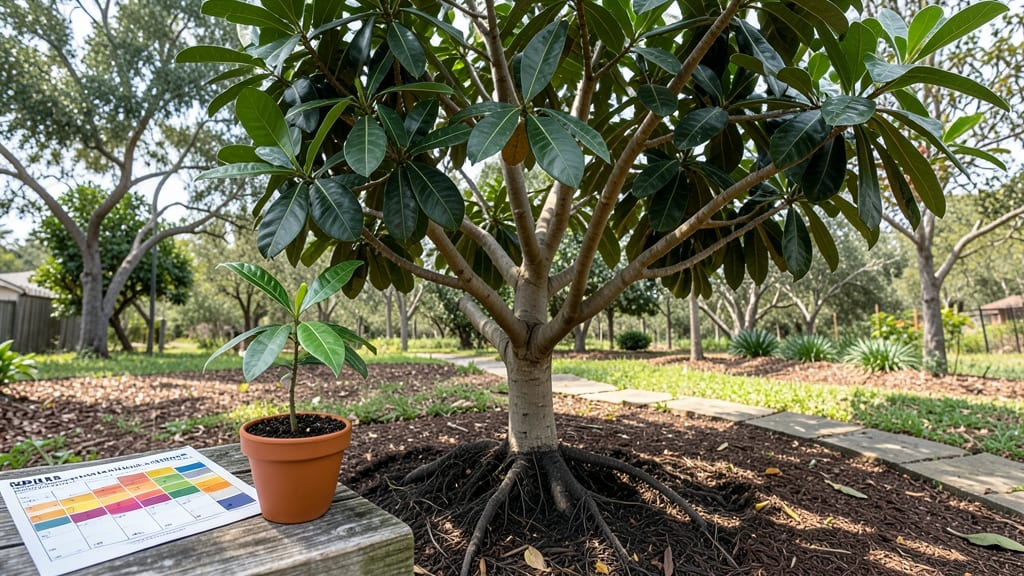
Mango trees grow best in USDA hardiness zones 10-12, where they can survive temperatures down to 30°F (-1°C) without damage. Outdoor mangoes in zones 9-11 require winter protection to prevent frost-related death.
Understanding a mango's hardiness zone is crucial because these tropical trees are extremely sensitive to cold. 🌱 Even a brief dip below 30°F (-1°C) can cause irreversible damage to leaves, branches, and roots.
In warmer zones (10-12), mangoes thrive year-round, but in cooler areas, gardeners must use protective measures like thick mulch or insulated containers to shield the roots. Some varieties, like the 'Cogshall' mango, are slightly more cold-tolerant than others, but none can survive prolonged freezing conditions without intervention.
For those in zones 8 or below, container gardening becomes essential. Moving potted mangoes indoors during winter or using frost blankets can extend their growing season. The key is replicating the tropical conditions they need to survive—consistent warmth, humidity, and protection from sudden temperature drops.
With the right precautions, you can successfully grow mangoes even outside their ideal climate range.
💡 In This Article
- How Cold Temperatures Affect Mango Tree Survival
- Growing Mangoes in Cooler Zones: Protection Strategies
How cold temperatures affect mango tree survival
Mango trees suffer irreversible damage when exposed to temperatures below 30°F (-1°C) because their tropical cells lack the protective mechanisms found in cold-hardy plants. Frost causes ice crystals to form within the plant's vascular system, physically rupturing cell walls and blocking water transport.
This is why even a single night of 28°F (-2°C) can kill leaves and young shoots, while prolonged exposure to 25°F (-4°C) or lower will kill the entire tree. The roots are particularly vulnerable since they're closest to the freezing ground.
Different mango varieties exhibit slight variations in cold tolerance, but none can survive winter conditions in zone 10 without protection. For example, the 'Haden' variety can handle brief dips to 28°F (-2°C) if acclimated, while 'Keitt' mangoes typically require temperatures to stay above 32°F (0°C).
The key difference lies in their leaf composition—some varieties produce thicker, waxier leaves that provide marginal protection against cold-induced dehydration. However, these adaptations are insufficient for zones 9 and below without human intervention.
Zone 10 represents the northern limit for outdoor mango cultivation because it's the coldest zone where winter temperatures rarely drop below 30°F (-1°C). In these areas, mango trees can grow year-round with minimal protection, but even here, sudden cold snaps can cause significant damage.
The critical factor isn't just the minimum temperature but how quickly the plant is exposed to cold—rapid temperature drops prevent the tree from slowly acclimating its metabolic processes, which is how cold-hardy plants survive winter.
What most gardeners don't realize is that mango trees experience a form of winter dormancy when temperatures approach their limits, but this isn't true hibernation like temperate plants. Instead, they enter a state of metabolic slowdown where growth halts completely.
This makes them extremely vulnerable to temperature fluctuations—even a brief warm spell followed by freezing can be fatal because the tree's systems reactivate before shutting down properly. This is why consistent winter protection is more effective than reactive measures.
The most critical damage occurs when temperatures drop below 28°F (-2°C) for more than 2-3 hours. At this point, the tree's protective mechanisms fail completely, and cell membranes begin to rupture.
The roots, being the largest part of the plant, are the first to show signs of distress—wilting leaves and browned foliage appear within days of frost damage.
In severe cases, the entire root system can die back, requiring the tree to regrow from the trunk, which weakens it for years afterward.
For those in zone 10, the real challenge isn't survival but maintaining fruit production. Mango trees in their optimal zone still require protection during unexpected cold snaps, particularly when young.
The first 3-5 years are critical as the tree establishes its root system—once fully mature, a healthy mango tree can better withstand brief cold periods through its developed vascular system.
However, fruit-bearing branches are always the most vulnerable, as the energy demands of ripening make them more susceptible to cold damage.